If the crypto industry's Digital Asset Market Clarity Act fizzles in the U.S. Senate, the result may not be fatal, but it's a heavy blow
The legislation has hit a wall, and the odds of it breaking through get slimmer by the moment. So a new law may not arrive this year to clearly define the distinctions among crypto securities, commodities and other assets, nor who is responsible for overseeing the companies that handle them. And the U.S. Commodity Futures Trading Commission may not get the explicit authority to govern the commodity trading in which the bulk of crypto changes hands.
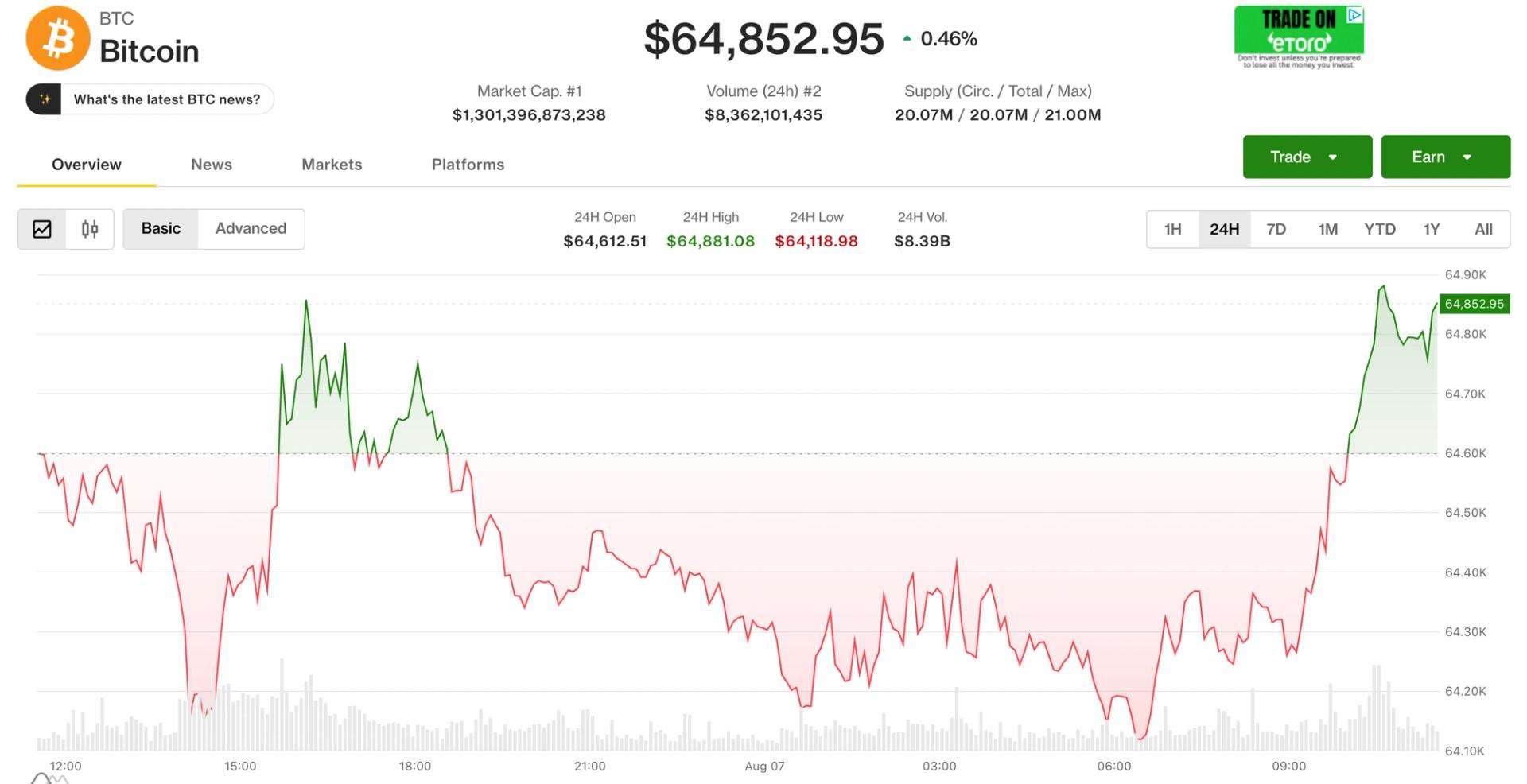
Before the contentious debates over stablecoin yield, illicit finance and the crypto ethics of government officials threatened to blow up the Clarity Act, the markets-oversight questions were the effort's core aims. Being unable to put the CFTC in place to supervise the trading of tokens such as bitcoin BTC$65,110.88 and Ethereum's ether ETH$1,911.22 means a serious chasm in U.S. oversight authority, though the derivatives regulator and its sister agency, the Securities and Exchange Commission, have sought to bandage some of the gaps and will have room to take matters into their own hands if Congress doesn't act.
That's what's likely to be the primary answer in the absence of a crypto law: The crypto-friendly SEC and CFTC continuing to hatch position statements and direct their existing authorities toward granting crypto businesses the powers they need — for now. Some crypto insiders have begun privately shrugging off the potential Clarity loss, arguing that the industry doesn't require a bespoke law to keep operating in the U.S., despite warnings that crypto companies and developers will move offshore in the absence of the legislation.
The SEC has been holding on to a major policy effort to clear a route for tokenized securities — conceived as a limited sandbox for an idea that could revolutionize the methods and speed in which securities change hands in the U.S. The agency has taken many months longer than it had first signaled, though close observers expect the agency will unleash it in the coming weeks.
It's also poised to propose its "regulation crypto" rule that's expected to ease the path for crypto developers, allowing fundraising and relaxed oversight for emerging projects.
However, Chair Paul Atkins has repeatedly expressed how Congress is the only source for permanent, durable policy authority, as he said again in a March speech.
"Only Congress can ensure that regulation in this area is future-proofed through comprehensive market structure legislation," he said.
The pending SEC moves would follow a spate of guidance from both the SEC and CFTC that has clarified how U.S. crypto efforts can proceed without running afoul of the regulators, whether it's mining, memecoins, rewards or several other categories. The most important of these regulatory statements emerging from the agencies was the "taxonomy" that sought to carefully define how the regulators would categorize different digital assets, and how those assets would be supervised.
Meanwhile, the banking regulators have been rapidly granting charters to crypto firms, and the Federal Reserve has been working on a tailored access to its payments rails and other services to cut out the banking go-betweens the digital assets players have relied on to serve customers. The new bank charters will have some durability, even when the Office of the Comptroller of the Currency that issues them changes management down the road.
As the Treasury Department and its tax branch, the IRS, also implement crypto-specific policies, the momentum of U.S. regulation becomes increasingly difficult to reverse.
The industry already counted a massive win last year in the passage of the Guiding and Establishing National Innovation for U.S. Stablecoins Act (GENIUS) Act. From a dicey 2022 in which crypto crashed and its highest-profile advocate was prosecuted for fraud, the sector turned things around in Washington to get a law governing U.S. stablecoin issuers and — for the first time — officially adding crypto to the regulated financial system.
Source
This article is syndicated for educational reading. For the latest updates, visit the original publisher.
Read on coindesk.com