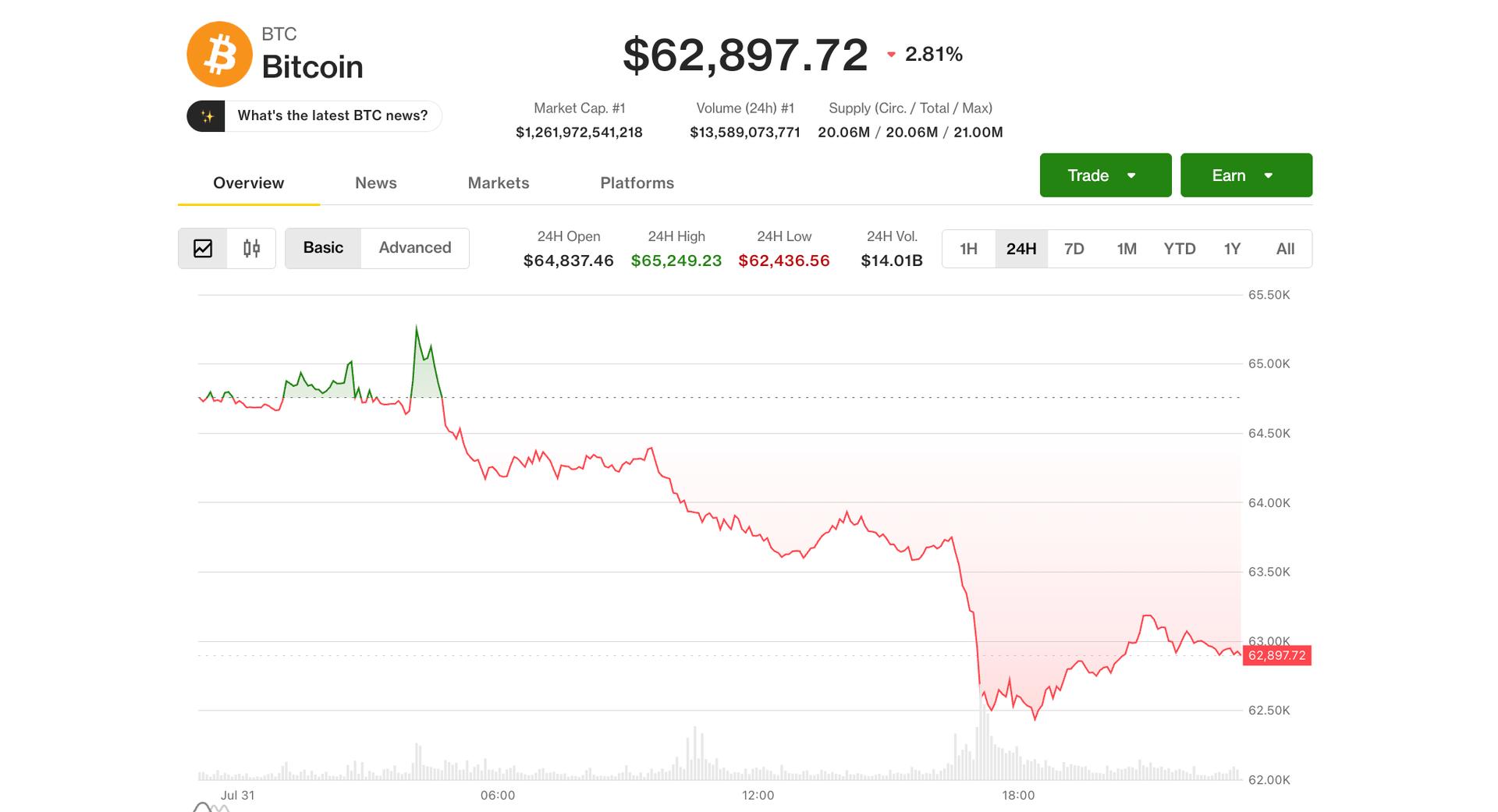
Ask most people how a crypto price gets set and they will describe spot trading: buyers and sellers meet on an exchange, and the last trade prints the price. But that has not been how it actually works for years as far as bitcoin, ether and the broader crypto markets are concerned.
Perpetual futures, also called perpetual swaps or “perps” for short, are leverage-friendly contracts that never expire, and they now account for roughly 93% of all crypto futures volume, with daily perp volume routinely running larger than the spot market underneath it.
A traditional futures contract has a settlement date, which is when it comes due and its price is forced to meet the spot price of the thing it tracks, also called the underlying. But a perpetual has no such date and can be held indefinitely (by paying a cost known as ‘funding rate,’ which varies daily).
A body of market-microstructure work has asked which venue "discovers" a bitcoin price first, meaning where new information enters the market before it shows up anywhere else. The answer has repeatedly come back pointing at derivatives.
A study in the Journal of Financial Markets by Carol Alexander and co-authors found that perpetual swaps on unregulated venues were the strongest instruments for bitcoin price discovery, with regulated futures and U.S. spot exchanges reacting to, rather than leading, those moves.
Other work has identified Binance's perpetual market as the primary source of price formation across the fragmented crypto landscape.
The evidence is not conclusive, however, and some studies find spot still leads at certain frequencies or during stress. But the direction of the literature over the past few years has been toward the derivatives market as the place where the price is made.
“Historically, we have seen perps leading mostly during bear market price rallies,” Julio Moreno, head of research at CryptoQuant, told CoinDesk. “For example, Bitcoin perps demand growth (blue bars in the chart) led the price rallies of January 2026, and April-May 2026.”
“In these periods, spot demand was contracting, while perps demand expanded, thus the perpetual futures market was leading prices despite demand contracting on the spot market,” he said.
Which brings us back to the funding rate. Because a perpetual contract never settles, nothing forces its price back toward spot the way an expiry date does for a traditional future. Instead, every few hours, whichever side of the trade is crowded pays the other.
When the perp trades above spot, traders who are long (or betting on higher prices) pay those who are short (betting on lower prices), which nudges the contract back toward the underlying price.
The funding rate is both the tether that keeps the contract anchored and a live readout of sentiment, which is why some traders watch it as closely as price.
Source
This article is syndicated for educational reading. For the latest updates, visit the original publisher.
Read on coindesk.com