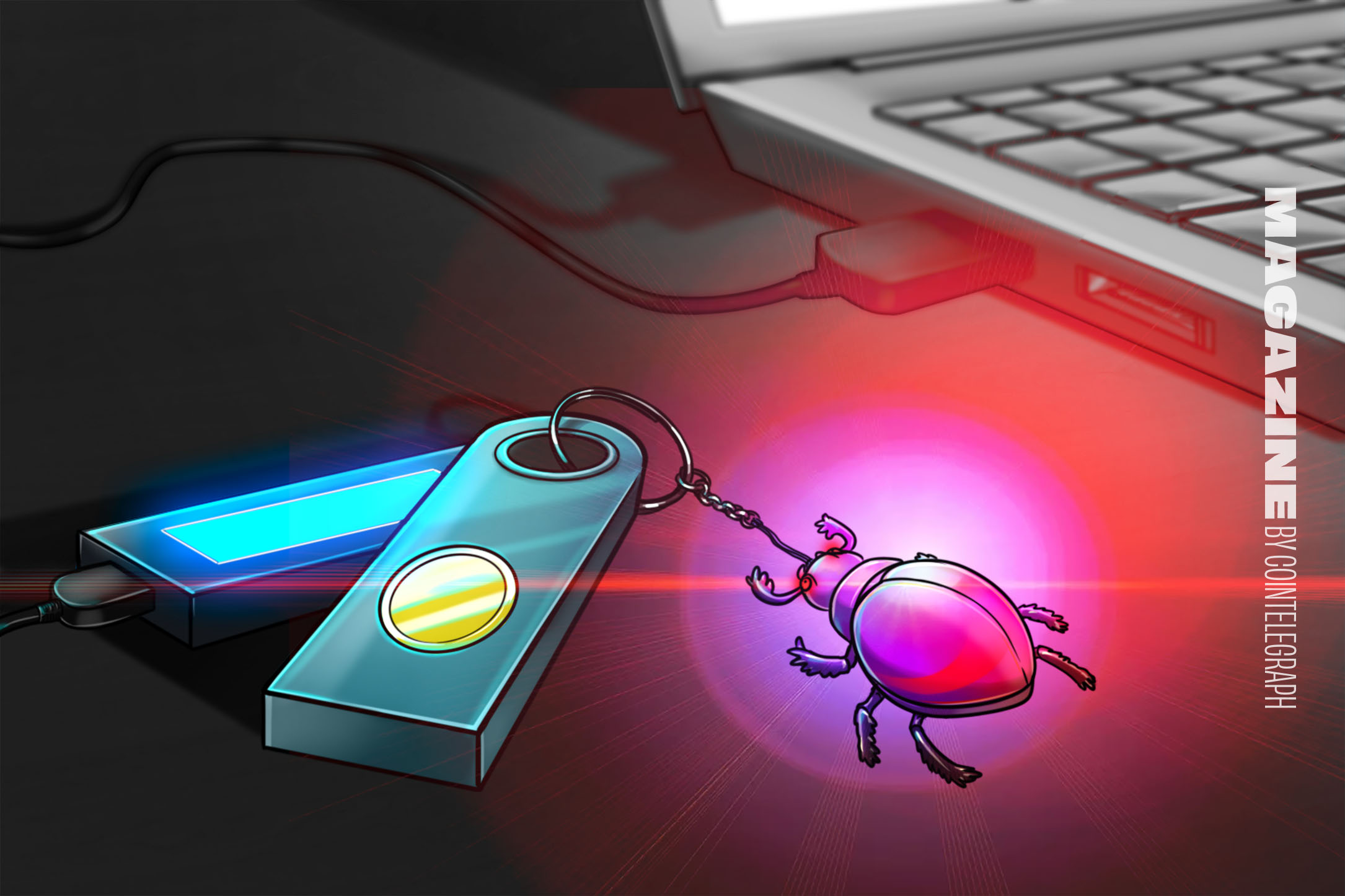
The Coldcard entropy flaw caused a crisis of confidence in hardware wallets. Here’s the details you need to know before you entrust Ledger, Trezor or Foundation with your Bitcoin.
Just when you thought crypto market morale couldn’t sink any lower, along comes the Coldcard entropy bug to prove you wrong.
The discovery of a flaw in one of the industry’s longest-running hardware wallets last Friday serves as a stark reminder that there is no perfectly safe place to put all your Bitcoin.
Coldcard disclosed the entropy-generation flaw affecting multiple Coldcard devices on July 31. Since then, researchers at Galaxy Digital say attackers have been able to steal more than 1,596 Bitcoin worth at least $100 million through several coordinated attacks.
Wallet manufacturers are now being forced to explain a process most users never even think about: how their wallet generates the private key to protect their Bitcoin.
Michael Tanguma, head of product at Bitcoin custody firm Onramp Bitcoin, tells Magazine:
Coinkite, the company behind Coldcard, has released firmware fixes and told affected users to migrate their funds, but the incident has shaken Bitcoin HODLers to the core, and it raises an uncomfortable question:
If Coldcard wallets can be exploited, does that mean all hardware wallets are potentially insecure?
The Coldcard vulnerability did not exploit Bitcoin itself nor break modern cryptography, but it struck at something much more fundamental: randomness.
Every Bitcoin wallet begins by generating a seed phrase from a pool of random data, which means that randomness should be sufficiently unpredictable to make the resulting private keys effectively impossible to guess. Entropy refers to how random it is.
If that randomness is weakened for any reason, attackers can reduce the number of possible keys that could be generate and eventually find a way to reproduce them.
Related: Coldcard hack sparks biggest sub-1 BTC move since FTX: CryptoQuant
Source
This article is syndicated for educational reading. For the latest updates, visit the original publisher.
Read on cointelegraph.com