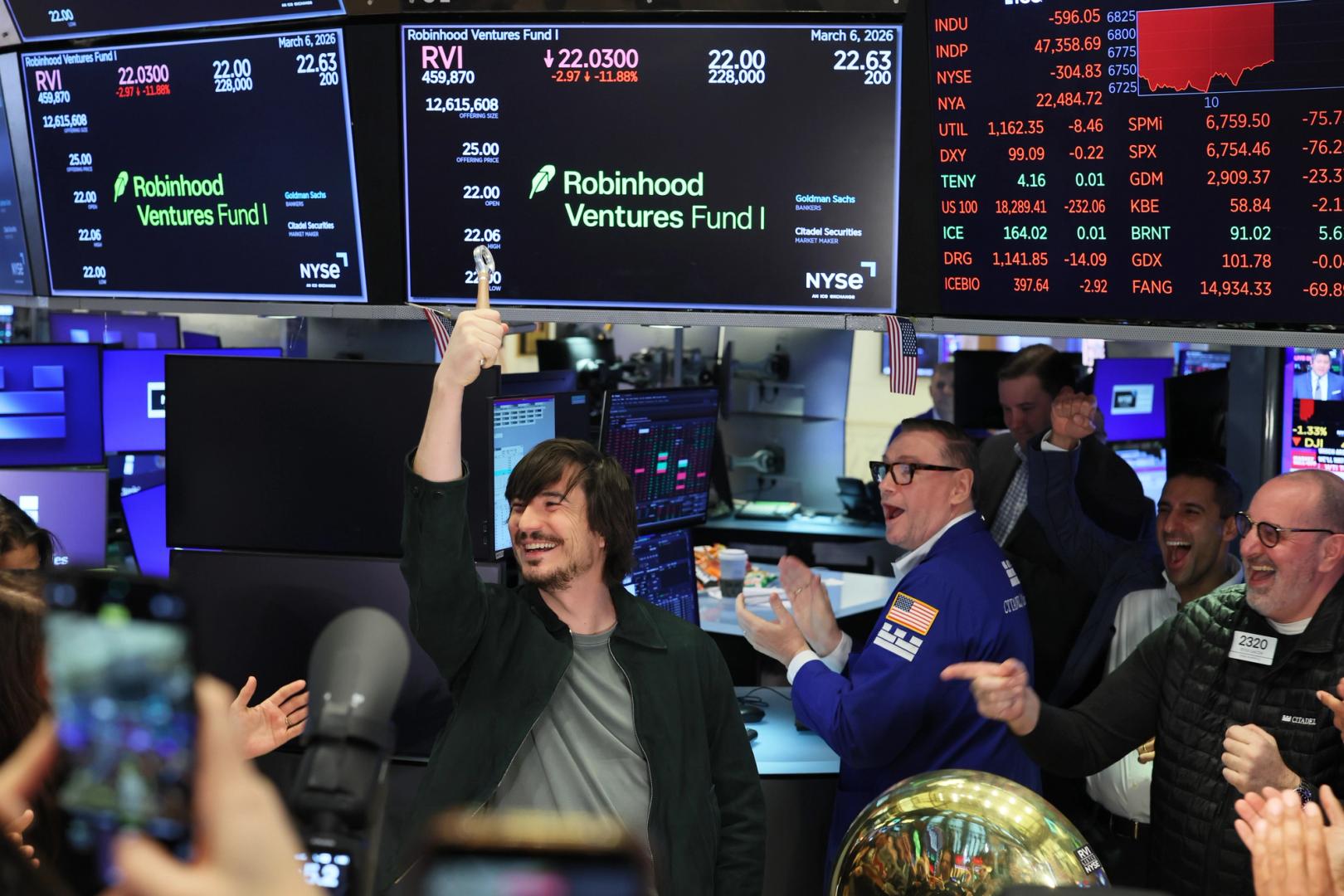
Robinhood Chain briefly climbed to No. 2 in decentralized exchange (DEX) trading volume over the last weekend, prompting comparisons with some of crypto's largest networks. But Robinhood says those comparisons miss the point.
The popular trading app argues that its opportunity is not to take volume from established crypto-native venues, but rather to leverage Robinhood’s more than 10 million active users to bring new investors into tokenized assets and onchain derivatives.
The bet appears to be that distribution, consumer relationships and wallet integration can bring its users, who may not be using onchain finance, into blockchain markets without requiring them to seek out specialist crypto platforms.
The challenges right now are that the network's activity remains concentrated in speculative memecoin trading, while its original pitch for real-world asset business remains small. Robinhood Chain generated about $878 million in 24-hour DEX volume on July 12, briefly leapfrogging Coinbase's Base and Ethereum, according to DefiLlama. The ranking drew viral attention across the crypto community.
The platform seems to still be in the early innings of its vision.
The chain processed just $5.9 million in perpetual futures on July 13, compared to Hyperliquid, the decentralized exchange that has become the benchmark for onchain derivatives, which did $8.9 billion on the same day. Robinhood's blockchain, meanwhile, bridged a total-value-locked (TVL) of $734 million, vastly exceeding its actual TVL of $211 million. The discrepancy reflects assets sitting idle in wallets rather than being deployed into the chain’s lending pools and yield products.
A similar pattern previously played out on another network, Blast, which attracted more than $2 billion in bridged assets following a point program that yield chasers farmed in order to receive an eventual airdrop. TVL eventually collapsed after the program ended. However, that’s not necessarily the case for Robinhood, as there are no such yield incentives.
Still, the contrast highlights how early the popular trading platform's blockchain still is. While the network saw a brief surge in spot trading, it has yet to develop the deeper trading activities or capital deployment that are seen on more mature blockchains.
The chain's original use case was tokenization of real-world assets, but that business remains small.
"The RWA opportunity is exactly why we built Robinhood Chain," Lee said, though he declined to offer specific targets for the six-month mark.
Tokenized real-world assets (RWAs) account for just $12.66 million in active market capitalization despite the recent spike in trading activity.
Much of that larger activity, instead, came from memecoin traders piling into a new token, CASHCAT, named after Robinhood's former company mascot. The token rallied by more than 2,100% in its first week, briefly reaching a $156 million market cap, which is 12 times larger than the chain's entire tokenized real-world asset market.
Source
This article is syndicated for educational reading. For the latest updates, visit the original publisher.
Read on coindesk.com