Aave's AAVE token climbed about 15% in the past 24 hours to around $80, its sharpest single-day move in months, after Standard Chartered initiated coverage with a $3,500 price target for end-2030 - or roughly 50 times more than where the token traded when the note landed Wednesday morning.
The call comes from Geoff Kendrick, the bank's global head of digital assets research, who also put a $100 target on Uniswap's UNI token last week.
His Aave thesis is that the protocol will recover its dominant position in decentralized lending as the broader DeFi market grows, with assets across the sector projected to expand roughly 37 times by 2030.
AAVE reaching $180 by year-end before climbing in stages to $600, $1,200 and $2,200 over the following three years, Kendrick said.
The protocol has had a rough stretch, however.
A $291 million exploit at lending platform KelpDAO in April spilled into Aave, triggering a liquidity crunch that cut deposits from $44 billion to about $23 billion and pushed Aave's share of the DeFi lending market from a 59% average down to 38%.
Meanwhile, the target depends on steps that have not happened yet.
Aave Horizon, the protocol's push to bring traditional finance firms onchain as borrowers, is central to Kendrick's model but unproven.
AAVE's all-time high is $661, set in 2021, meaning the 2030 target requires the token to go five times past levels it has never reached. Kendrick's UNI target drew some criticism this week over its methodology, and the same scrutiny applies here.
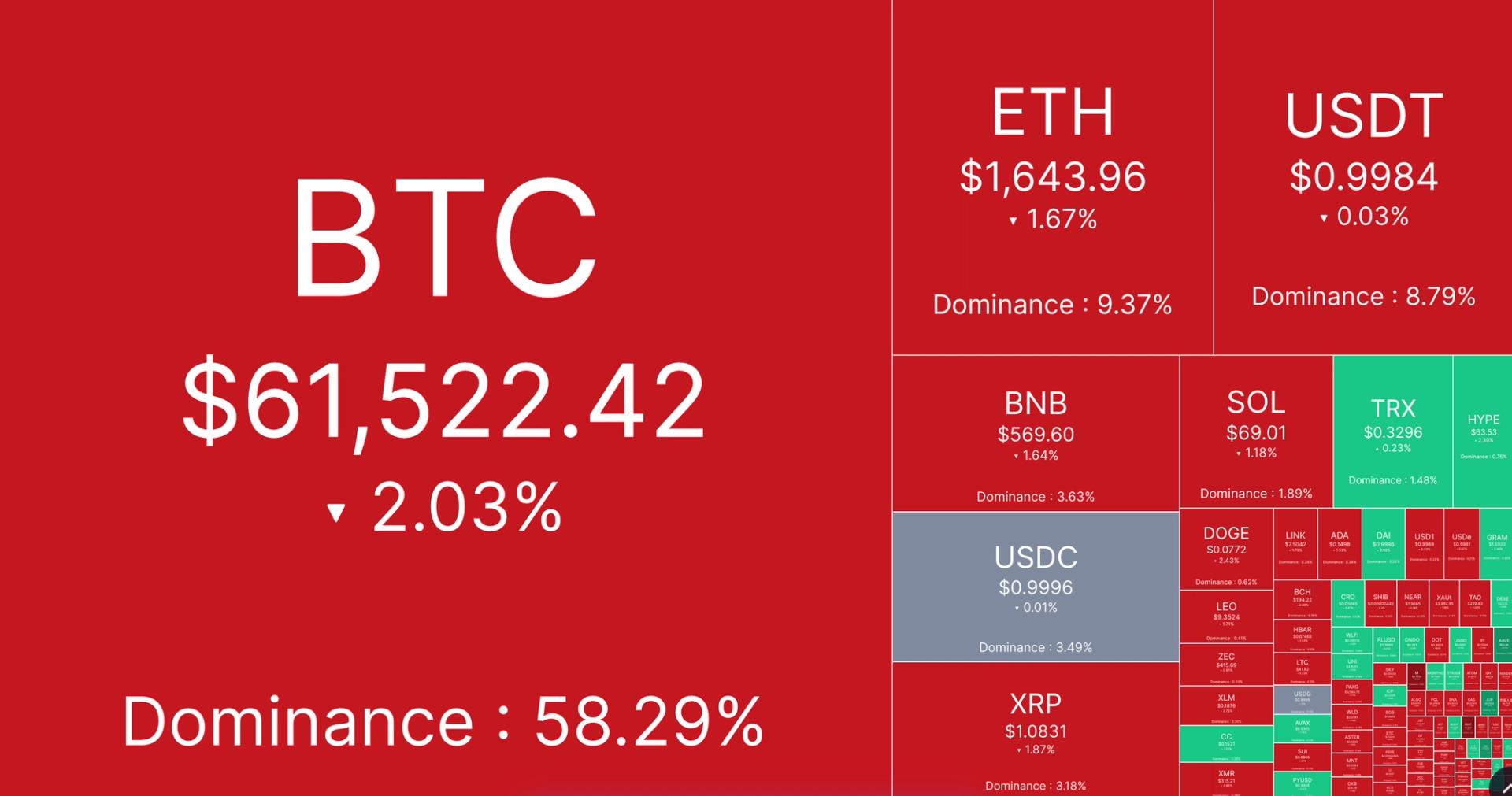
Bitcoin dropped to $59,175 overnight, its lowest point since early June, before recovering to about $61,500 by Thursday morning, per CoinDesk data. Nearly $1 billion worth of futures positions were liquidated across crypto majors, such as bitcoin, ether, solana, and others, to tokenized versions of stocks, such as Micron Technology Inc (MU) and Sandisk (SNDK).
The dip triggered roughly $430 million in long liquidations on bitcoin-tracked futures, or bets on higher prices that were automatically closed as the price fell.
No single catalyst drove the move. Bitcoin has lost about 10% since Monday's peak near $65,500, pulled lower by the same forces that have dominated all week: a hawkish Fed, six straight weeks of ETF outflows, thinning summer liquidity, and a quarter-end options expiry on June 30 that traders say is keeping the market unstable.
Source
This article is syndicated for educational reading. For the latest updates, visit the original publisher.
Read on coindesk.com