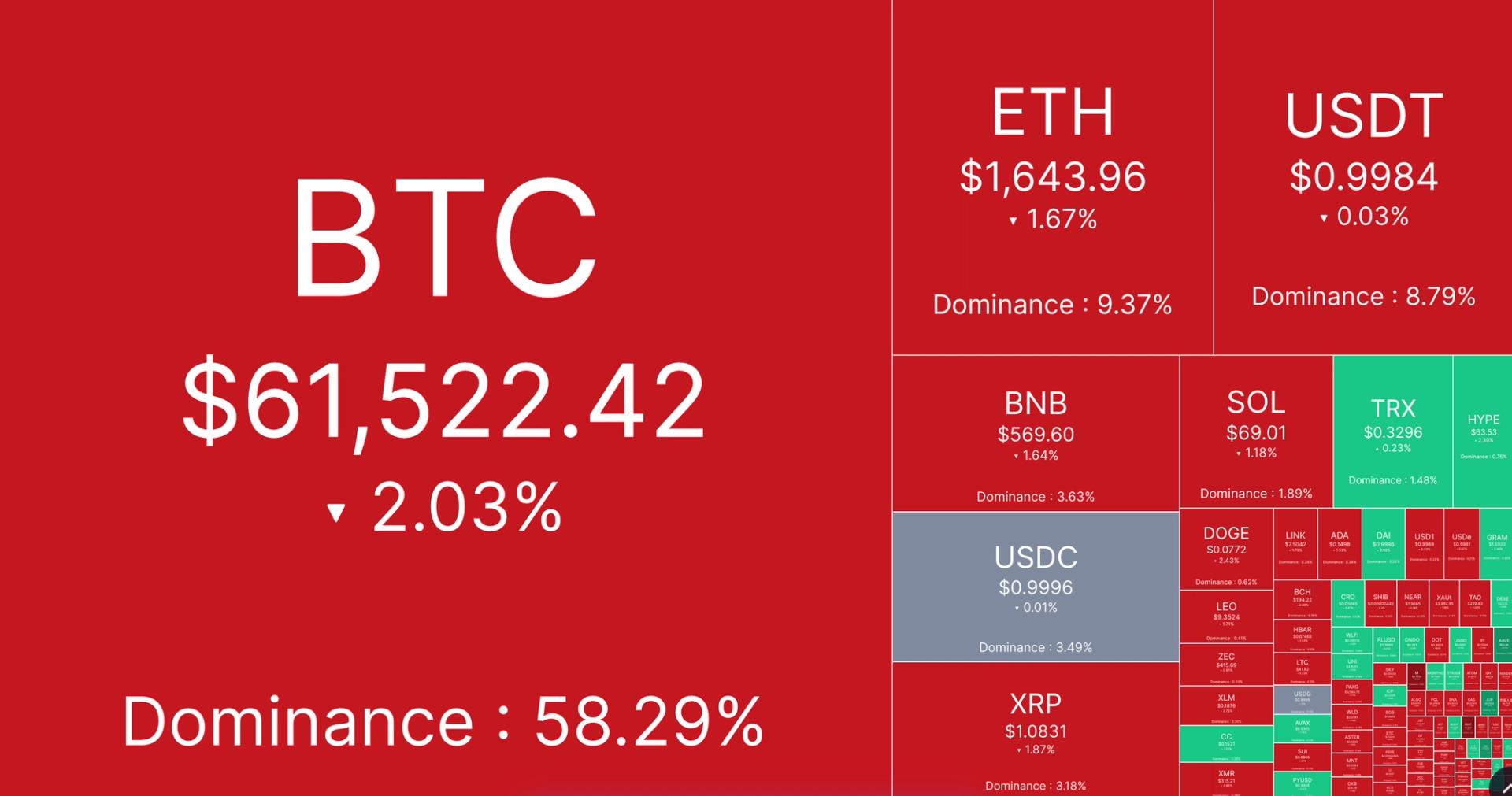
Markets are focused on the upcoming US Core PCE inflation data, with consensus expecting the year over year reading to come in at 3.4% and the month over month figure at 0.3%. Expectations for persistent inflation have led markets to price in two 25 basis point Federal Reserve rate hikes over the next eight months. This has weighed on risk assets, with Bitcoin hovering around $60,000, while precious metals have also weakened, with gold falling below $40,000 an ounce and silver slipping below $58.Meanwhile, the US Dollar Index (DXY) has climbed above 101. A hotter than expected PCE reading would likely strengthen the dollar and add further pressure on risk assets.
Bitcoin briefly fell below $60,000 during the US trading session, coinciding with $469 million in net outflows from US spot Bitcoin ETFs. This marked the 30th largest single day redemption since the ETFs launched in January 2024.
As a result of the consistent outflows for the past few months, cumulative net inflows remain at $52.8 billion, a level last seen on 14 July 2025, although this is approximately $2.3 billion below the peak reached a few days later.
The U.S. two-year Treasury yield is on the cusp of a significant technical breakout.
Highly sensitive to near-term interest rate expectations, the two-year yield is testing the descending trendline that has capped its decline since the October 2023 peak of 5.26%.
A decisive move above this trendline would mark a classic bullish breakout for yields, signaling potential for further upside.
Such a development would imply tighter financial conditions, likely supporting a stronger U.S. dollar while exerting downward pressure on risk assets, including bitcoin and equities.
Brent crude fell below $72.48 a barrel on Thursday, wiping out every gain made since the U.S.-Iran war began, as tankers resumed open passage through the Strait of Hormuz and oil markets flooded with supply.
Cheaper oil eases the inflation pressure that pushed the Fed hawkish in the first place, and a sustained drop could eventually shift the rate outlook that has weighed on bitcoin all month.
The chain runs oil lower, then inflation softer, then Fed less hawkish, then risk assets get room to recover. But that sequence works with a lag of months, not days, so the oil move is a tailwind in the making rather than one that's arrived.
Aave's AAVE token climbed about 15% in the past 24 hours to around $80, its sharpest single-day move in months, after Standard Chartered initiated coverage with a $3,500 price target for end-2030 - or roughly 50 times more than where the token traded when the note landed Wednesday morning.
The call comes from Geoff Kendrick, the bank's global head of digital assets research, who also put a $100 target on Uniswap's UNI token last week.
Source
This article is syndicated for educational reading. For the latest updates, visit the original publisher.
Read on coindesk.com