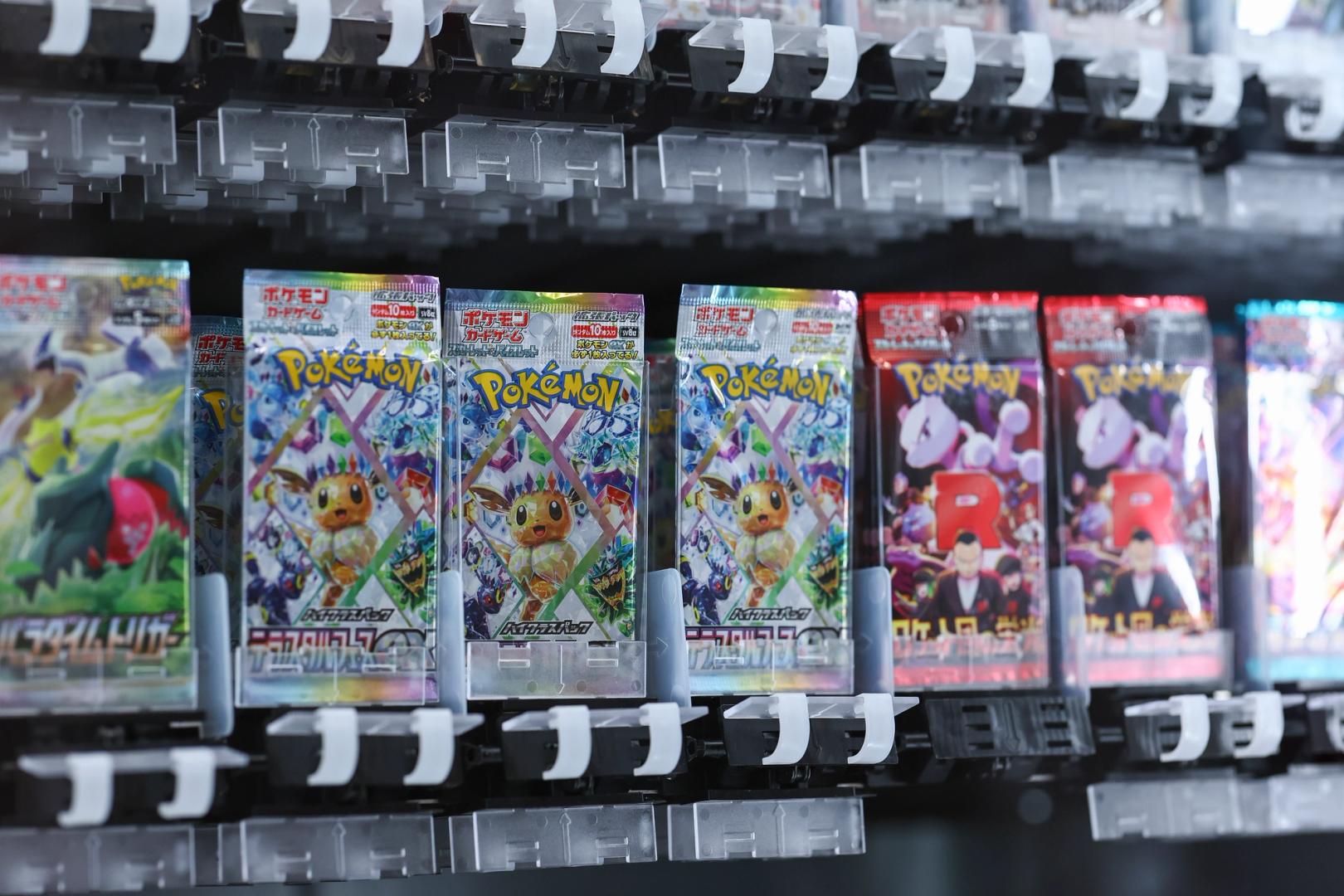
It’s 3:30 a.m. on a cool April morning, and hundreds of people are already lined up outside a Costco in British Columbia, some sitting in folding chairs, hours before the store opens.
The buyers aren't here for a bulk deal on toilet paper or groceries. They’re waiting to be the first to get their hands on boxes of Pokémon cards, specifically the "Prismatic Evolutions" cards, selling around C$100 each. On secondary marketplaces such as Facebook Marketplace, the cards often get listed for several times their retail price.
And just recently, popular influencer Logan Paul sold a rare Pokémon card, a Pikachu Illustrator, for $16.5 million dollars, reportedly earning him more than $8 million in profit. The buyer? AJ Scaramucci, founder of venture capital firm Solari Capital and son of financier Anthony Scaramucci.
In addition to Costco, other big-box retailers are seeing the Pokémon card frenzy show up in their businesses. Target said that sales of its trading cards were up nearly 70% last year, driven largely by Pokémon, and that it plans to expand store space dedicated to trading cards as part of its growth strategy. Walmart also reported its online marketplace saw 200% jump in trading card sales last year. Both retailers have had to impose purchase limits on trading cards to curb scalping. Meanwhile, eBay, the largest marketplace for these cards, saw $2.62 billion in sales in 2025.
In fact, both the S&P 500 (up about 13%) and bitcoin (down 29%) underperformed this year compared with the value of Pokémon cards (rose 28%).
The hype is part of a broader transformation of trading cards from hobby-store collectibles into a multibillion-dollar market that increasingly resembles an alternative asset class.
Exactly how large this market is hard to pin down, because it has developed through dense, decentralized dealer networks, local card shops and conventions. So the market size varies by methodology and firm, but the rough estimates put the value around $10-$15 billion today. For example, Kovoy VC, which invests in gaming platforms and tech, pegged the value at around $13 billion in 2024, and Mordor Intelligence puts it at around $15 billion in 2026. Meanwhile, TCGCharts estimates that the market cap of every "graded" card is around $10.8 billion today.
But there’s a big problem: the trading card business is booming, but the infrastructure required to trade them quickly and efficiently hasn’t kept pace with the explosion of popularity.
Collectors are still stuck with a 1990s-style slow, arduous process of waiting weeks or months for their cards to be graded for value, listing them on inefficient marketplaces with high fees, and then having to ship them by snail mail to reach buyers. For the new generation of investors, who are used to transacting financial assets within a fraction of a second, the process seems antiquated.
A new class of platforms is betting that blockchain technology can replace some of those old ways by storing the physical card in a secure vault while enabling faster, digital ownership transfers.
One of such products is Deadstock, the first platform from startup ATH Labs. The firm, based in Abu Dhabi and co-founded by Dominic Jang, a longtime Pokémon card collector and traditional finance veteran, runs a closed beta of its platform on the Arbitrum blockchain, featuring high-value, professionally graded Pokémon cards. Bullish Capital, CoinDesk’s parent company’s venture arm, has invested in the company.
ATH is betting that the next stage of growth in the collectibles market will depend less on creating more cards than on making existing ones easier to trade, finance and use as collateral.
Source
This article is syndicated for educational reading. For the latest updates, visit the original publisher.
Read on coindesk.com