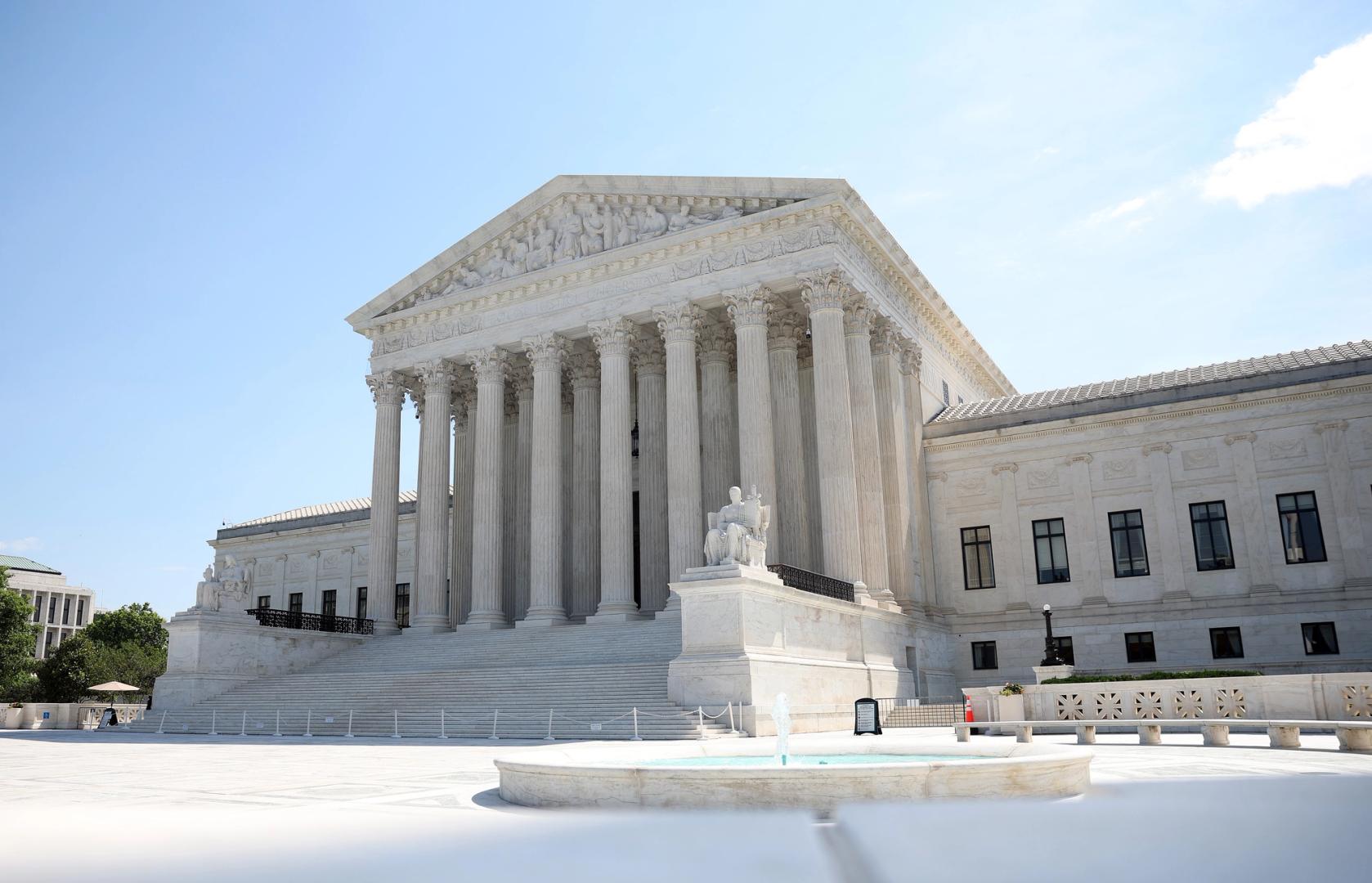
The stage is now set for the U.S. Supreme Court to take up a case on whether prediction markets — at least prediction markets tied to sports contracts — are gambling products that should be regulated by states, or swaps regulated by the federal Commodity Futures Trading Commission. That doesn't mean that the high court will do this, necessarily, but the ingredients are in place.
PS: I'll be at the Boston Blockchain Week conference this week. Around? Let's catch up.
You’re reading State of Crypto, a CoinDesk newsletter looking at the intersection of cryptocurrency and government. Click here to sign up for future editions.
New Jersey filed for a writ of certiorari with the U.S. Supreme Court last week, asking the nation's high court to take up the issue of whether prediction markets' sports-related contracts are actually gambling products or federally regulated swaps products.
It's unclear if the Supreme Court will take up this case, but every lawyer I've spoken to for the past year thinks that SCOTUS will take up a prediction market case, likely within the next year. To somewhat overly simplify the stakes: if a majority of the justices agree that sports-related prediction markets are just gambling products, all of the companies offering these products will need to secure state licenses and approvals, and pay taxes in each state they operate in. On the other hand, if a majority of the justices agree that these are swaps that are properly overseen by the Commodity Futures Trading Commission, there will be significant implications for states and pure play sports betting firms.
New Jersey asked the U.S. Supreme Court to evaluate whether the Dodd-Frank Wall Street Reform and Consumer Protection Act preempts state regulations around gambling, if the products in question are offered on federally regulated designated contract markets.
What the Supreme Court really needed was a circuit court split, several lawyers following prediction market cases told CoinDesk, and that exists now after last month's Ninth Circuit Court of Appeals ruling.
New Jersey was already entitled to appeal the Third Circuit ruling from this past April to the Supreme Court, but the split gives the issue more momentum, said Carl Kennedy, a partner at the law firm Katten who co-chairs its financial markets and regulation group.
And while the Supreme Court may choose to wait for other circuits to weigh in, the justices don't need to, at this point.
"Although the Supreme Court doesn't explain why it grants or denies certiorari, it is likely to grant cert with a circuit split or other court conflicts, and a nationally significant question," said Katherine Kirkpatrick Bos, head of legal at Chainlink Labs. "Here we have litigation which is materially affecting an entire industry's business model."
Still, any further circuit court rulings — such as the forthcoming Sixth Circuit or Fourth Circuit — would give the Supreme Court more information as it prepares to take up the issue, said Todd Phillips, a director at the Klaros Group.
"If the Third Circuit is the outlier and the Ninth Circuit and the Sixth Circuit and the Fourth Circuit all agree that prediction markets are violating state law, that gives the Supreme Court a signal that when courts are provided with more information, they find [in favor of the states]," Phillips said. "If the Sixth and Fourth Circuits agree with New Jersey, that's a sign, and if they split, that's also a sign. This is all just information for the Supreme Court in figuring this out."
Source
This article is syndicated for educational reading. For the latest updates, visit the original publisher.
Read on coindesk.com