U.S. stocks are having their moment again, and bitcoin, as it has all year, is sitting this one out. The reasons why go beyond the obvious.
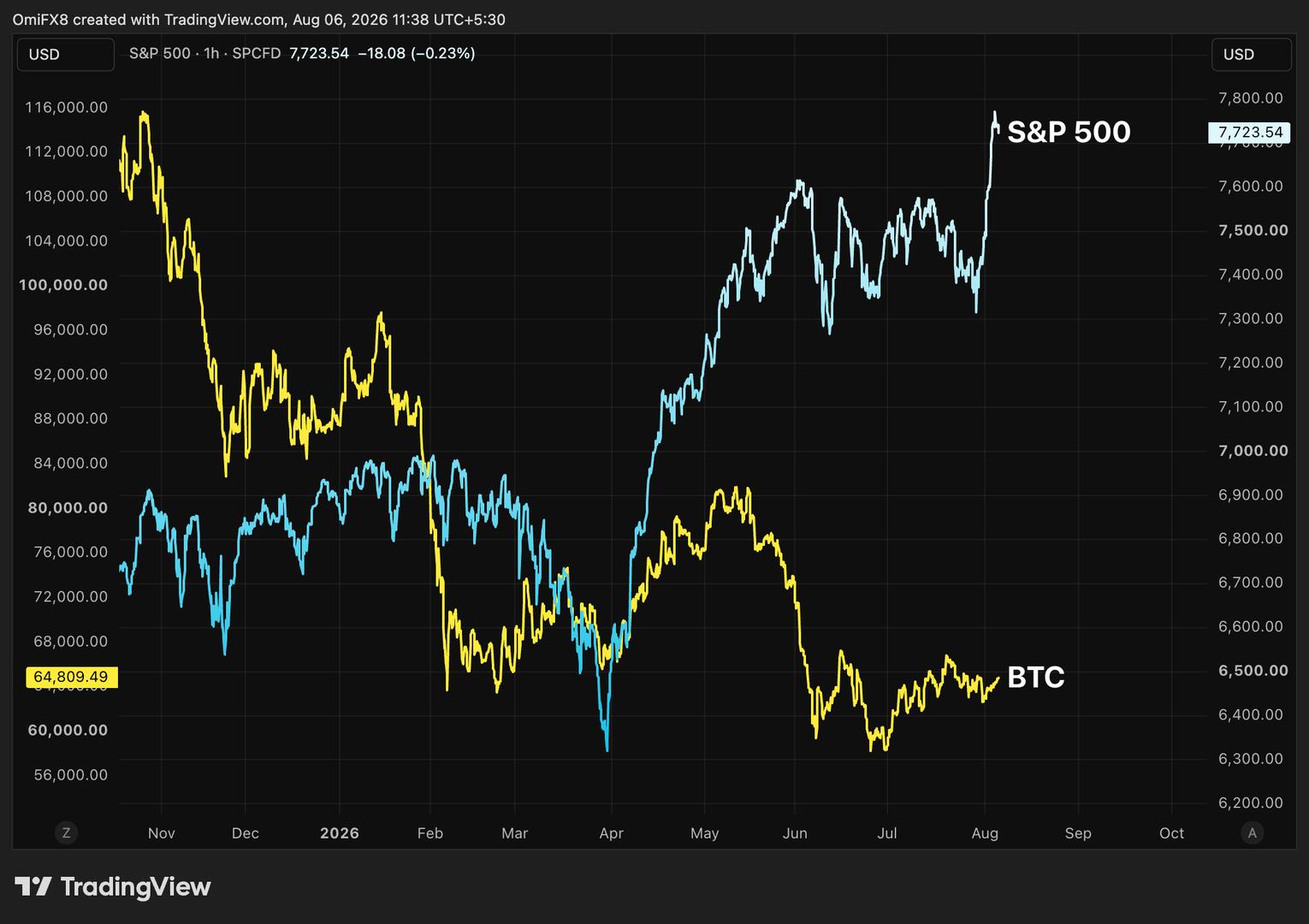
The S&P 500 index has gained 3.12% this month, adding roughly $2.1 trillion in market cap and pushing its total value to a record $70.5 trillion, with its price at 7,723 points. The Nasdaq 100 and Dow Jones Industrial Average are buoyant too. Wall Street, by every measure, is in full risk-on mode.
Bitcoin isn't following suit, even though, since the Covid crash of early 2020, it has tended to track stocks more often than not. The token is up just 2% this month, trading around $64,600, sitting exactly where it's been gyrating for weeks.
Part of bitcoin’s underperformance stems from the fact that the equity rally is driven primarily by stock-specific narrative, particularly tied to AI, rather than by a broad macro risk-on impulse that would lift beta assets like BTC in tandem.
"Partly because the equity rally is being driven by areas to which bitcoin has little direct exposure, particularly AI and semiconductor stocks," said Adam Haeems, head of asset management at Tesseract Group, which manages more than $500 million in client assets.
Of course, some aspects of macro, such as the renewed drop in oil and hopes for a return to normal flows via the Strait of Hormuz, which had been disrupted by the Iran war, are positive for all risk assets. But they benefit stocks first.
"Lower oil prices resulting from a reopening of the Strait of Hormuz could benefit both markets, but through different channels. Equities receive a relatively immediate benefit through lower business costs. For bitcoin, the effect runs through inflation expectations and then Federal Reserve policy. That takes longer, and the outlook for September remains uncertain," Haeems explained.
Paul Howard, senior director at market making firm Wincent, made a similar point.
"The stock rally is biased towards AI and mega-caps which doesn't necessarily translate into crypto flows," Howard said. "The crypto market rally driven previously by ETF demand the last 2y has been subdued as it now seeks its own catalyst independent of US equities. This likely will come in Q4 when the market expects regulatory clarity and continued stablecoin growth."
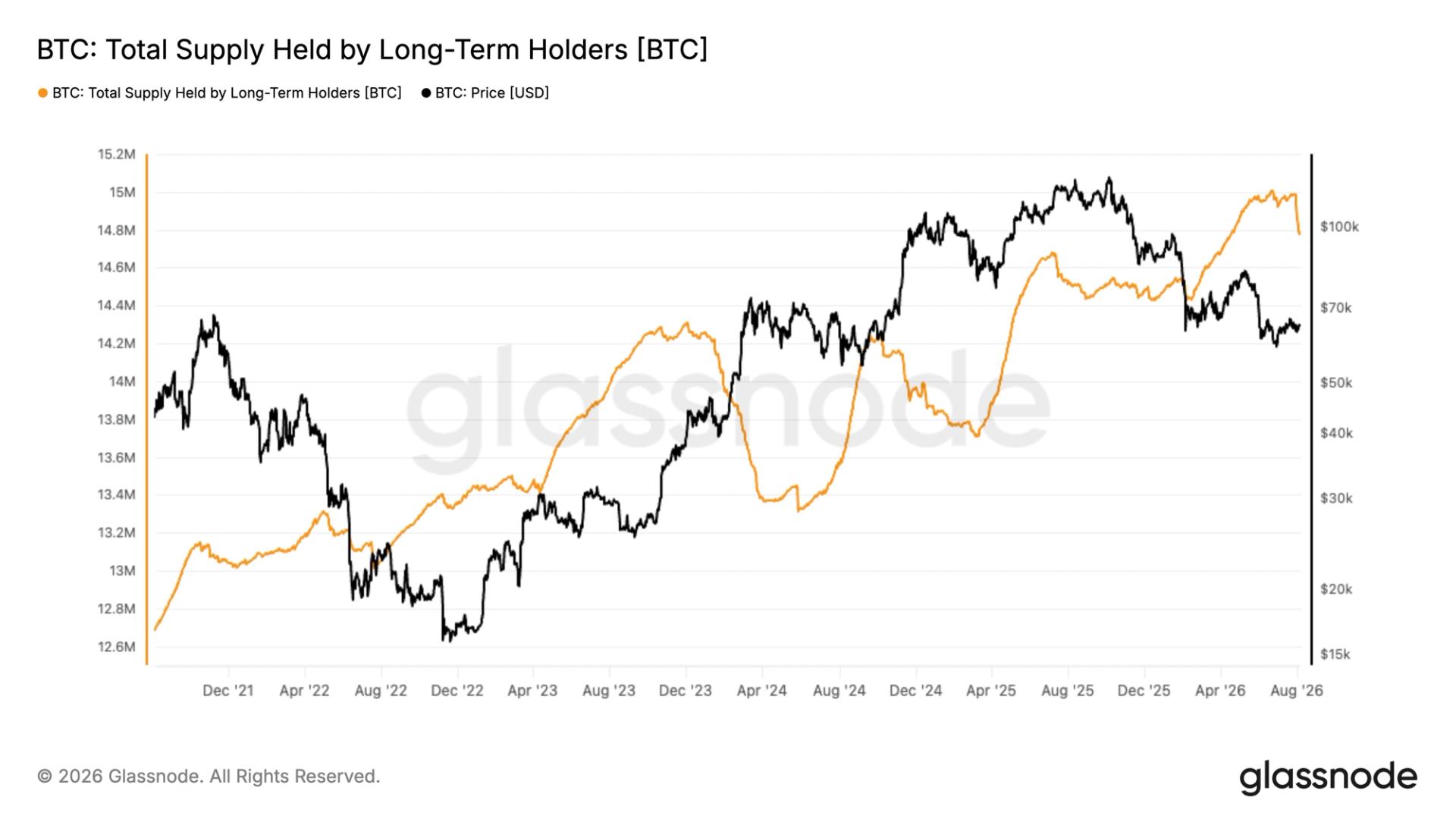
Crypto has also been fighting its own battles that may be capping the upside. To name a few: the $120 million Coldcard exploit, uncertainty around the Clarity Act, and reports of Strategy liquidating its BTC.
"Crypto has also faced its own pressures. The Coldcard exploit has damaged sentiment, while Strategy has sold bitcoin in three consecutive months. Neither event has triggered a broader credit event or forced liquidation cycle," Haeems said.
He added that rising bond yields are creating an additional headwind for crypto, leading to an outflow of capital via stablecoins. Leading dollar-pegged stablecoin USDT's supply has dropped to its lowest since 2025.
Source
This article is syndicated for educational reading. For the latest updates, visit the original publisher.
Read on coindesk.com