This is an excerpt from CoinDesk newsletter 'Daybook.' Sign up here, if you haven't already.
The multimillion-dollar Coldcard hack, anemic institutional demand, and uncertainty in the regulatory and macroeconomic environment are some of the pain points for the crypto market right now.
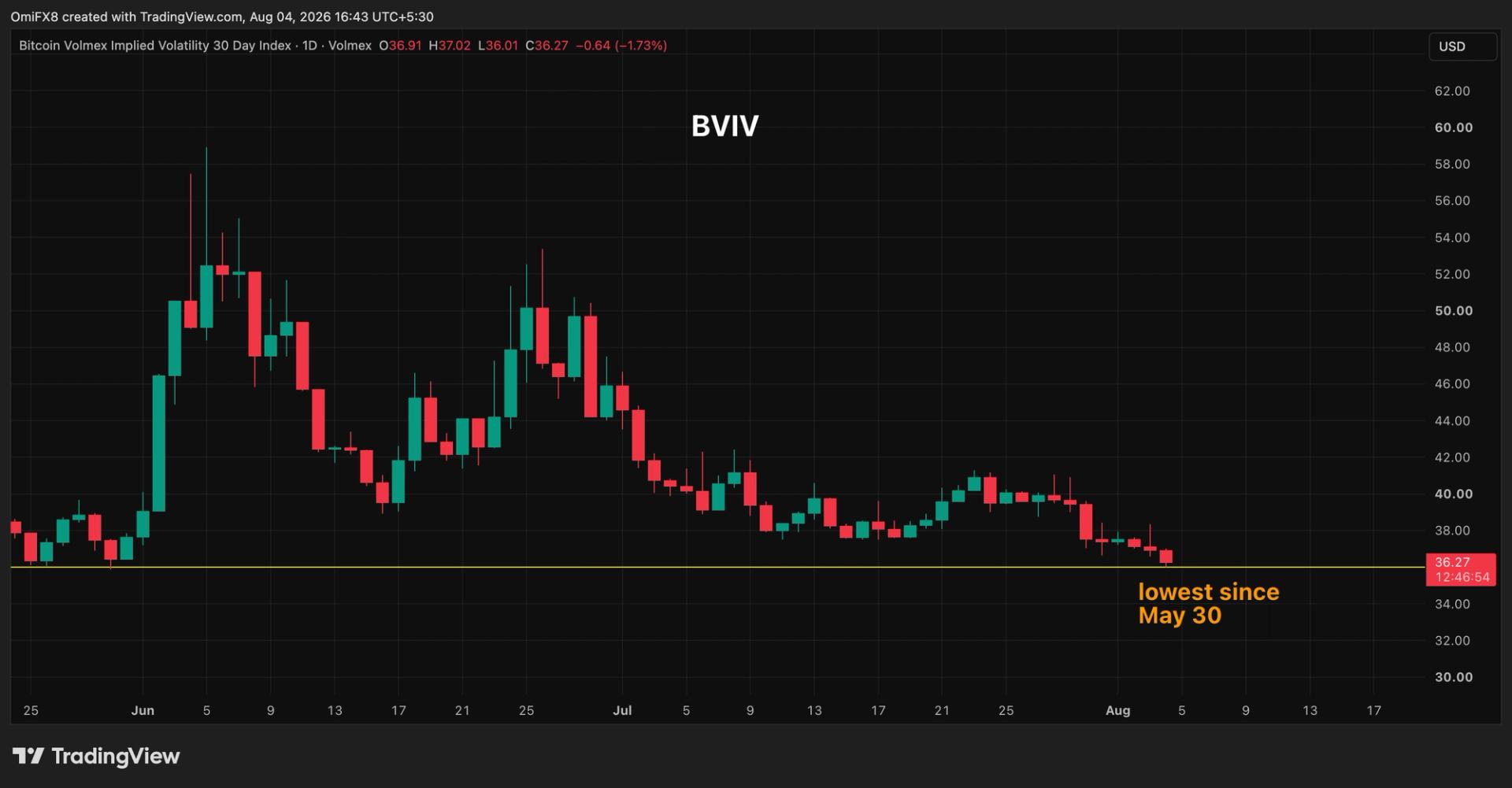
Yet there are no signs of panic or stress in the market, at least not in the continued meltdown of bitcoin’s 30-day implied volatility index, BVIV. The index is influenced by demand for options or hedging bets sought when traders fear uncertainty and wild swings.
The BVIV has dropped to 36%, the lowest since May 31, and down from highs near 60% in early June. A market that doesn’t freak out on bad news is often said to be bullish, poised for a notable upswing.
That said, volatility tends to be mean-reverting, rising after dropping below historical standards and falling when overvalued. The BVIV is now hovering at levels that have previously served as a floor, paving the way for a volatility boom. In other words, traders might want to be vigilant on the gauge, as any surge could be accompanied by a big directional move, bullish or bearish.
For now, some factors seem to favor the bear case. For instance, institutional demand remains anemic. The U.S.-listed spot bitcoin ETFs posted $61.53 million in outflows last week, snapping a three-week streak of tepid inflows. Moreover, USDT’s market capitalization, the largest among dollar-pegged stablecoins, fell to the lowest level since October, while USDC’s also remains in a downtrend. (check the Daily Signal).
Real or inflation-adjusted returns on longer-duration Treasury notes have risen to the highest since 2008, denting the appeal of investing in emerging technologies and risk assets. Further, the U.S. Clarity Act’s passage remains uncertain.
Still, at least one data point suggests limited downside. That is tied to the number of BTC acquired around current price levels.
“Approximately 155,000 BTC moved into the $62,000-$65,000 cost-basis range, indicating that selling was absorbed by buyers near current prices. This concentration now represents 0.7 percent of circulating supply and could keep BTC range-bound until a stronger catalyst emerges,” analysts at Bitfinex said.
Read more: For analysis of today's activity in altcoins and derivatives, see Crypto Markets Today . For a comprehensive list of events this week, see CoinDesk's "Crypto Week Ahead."
The chart shows market caps for USDT and USDC, the top two dollar-pegged stablecoins.
USDT’s market cap has declined to $183 billion from nearly $190 billion in April. USDC’s market value has dropped to $72 billion from $79.5 billion in March.
Source
This article is syndicated for educational reading. For the latest updates, visit the original publisher.
Read on coindesk.com