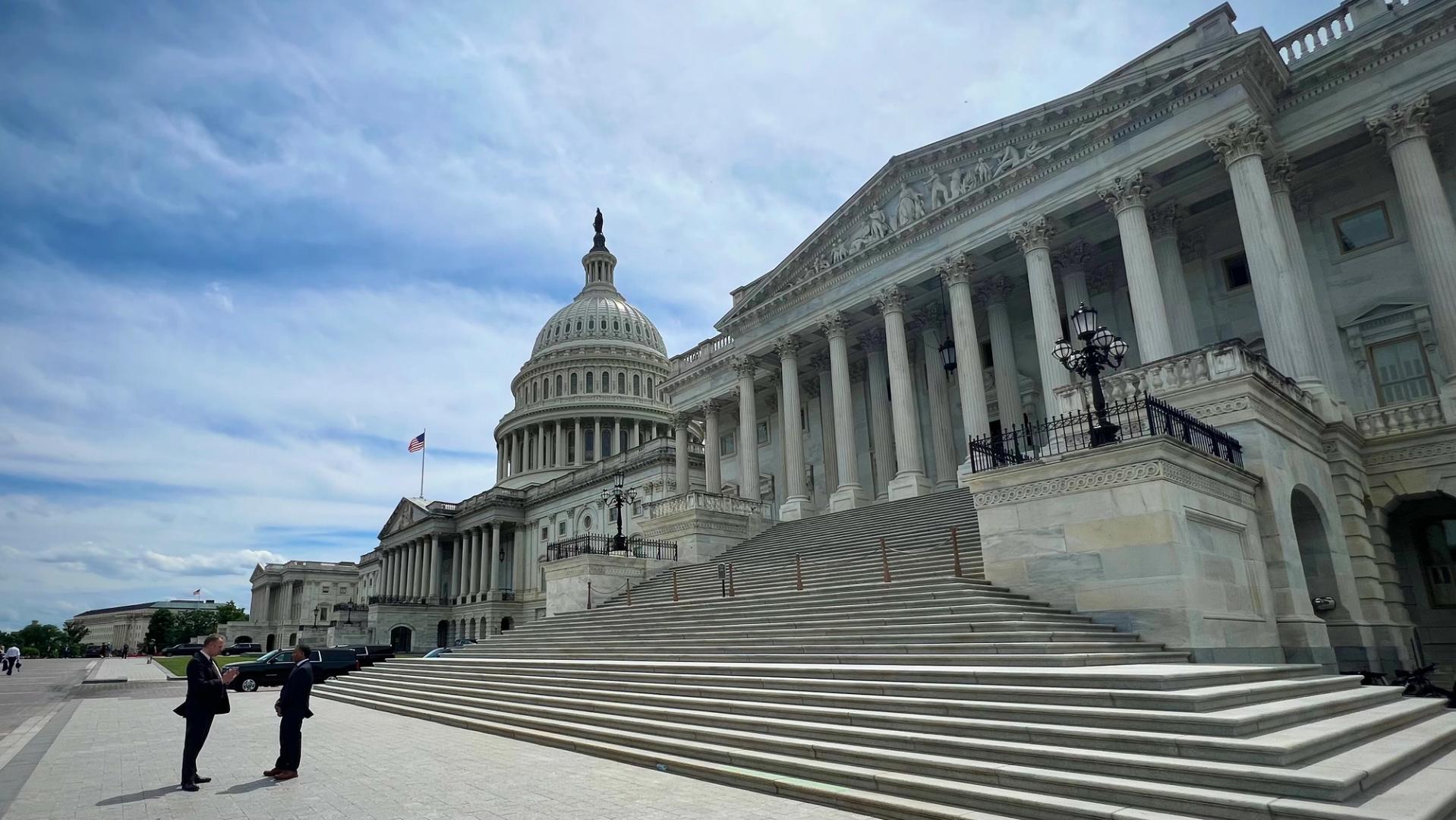
Thanks to the newly passed U.S. Senate housing affordability bill, the Federal Reserve may be heading toward a formal ban from instituting a digital dollar in the form of a central bank digital currency (CBDC), despite the fact the Fed wasn't working on such a project.
Republican politicians had embraced an aggressive opposition campaign against the U.S. following in European and Chinese footsteps in the pursuit of a CBDC, labeling the idea a dangerous overreach of government surveillance. So they insisted it get inserted into the 21st Century ROAD to Housing Act that just passed the Senate in an 85-5 vote Monday night.
The concept of a digital dollar likely would have needed the backing of the White House, Congress and the Federal Reserve, none of which pushed to pursue one. But if the House of Representatives follows suit and votes to send the housing bill to President Donald Trump for his signature, the CBDC will be legally stifled.
However, the ban would only last for a very limited four years until the end of 2030.
The idea of a CBDC is that a nation or other jurisdiction's central bank issues and manages the activity of an asset that would be akin to a government stablecoin. The European Central Bank has been working on a digital euro that's set to get a pilot program next year and a full launch in 2029. China also pursued a digital yuan issued by the People's Bank of China.
In past remarks, former U.S. Fed Chair Jerome Powell had said that even were the Fed to consider a CBDC, it would have left the operation and management of it to banks, seeming to undermine the possibility of a financial police state described by Republican critics. But new Fed Chair Kevin Warsh had said during his nomination hearing that he fully opposed a U.S. CBDC, calling it a "bad policy choice."
President Donald Trump signed an executive order in January 2025 that prohibited his administration from making any moves toward a CBDC, which he said would "threaten the stability of the financial system, individual privacy, and the sovereignty of the United States."
Trump's congressional allies agreed and inserted it into the unrelated housing bill, which states that "the Board of Governors of the Federal Reserve System or a Federal reserve bank may not issue or create a central bank digital currency or any digital asset that is substantially similar to a central bank digital currency directly or indirectly through a financial institution or other intermediary."
House lawmakers were reportedly contemplating an accelerated process to put their own approval on the housing bill by as soon as Tuesday. A signature from Trump will make it law, including the CBDC provision.
In May, combined exchange volumes fell 3.45% to $4.41T; the lowest since September 2024. RWA perpetual futures volumes rose 10.4% against the trend, hitting a new all-time high.
In May, combined exchange volumes fell 3.45% to $4.41T; the lowest since September 2024. RWA perpetual futures volumes rose 10.4% against the trend, hitting a new all-time high.
In May, combined exchange volumes fell 3.45% to $4.41T; the lowest since September 2024. RWA perpetual futures volumes rose 10.4% against the trend, hitting a new all-time high.
Source
This article is syndicated for educational reading. For the latest updates, visit the original publisher.
Read on coindesk.com